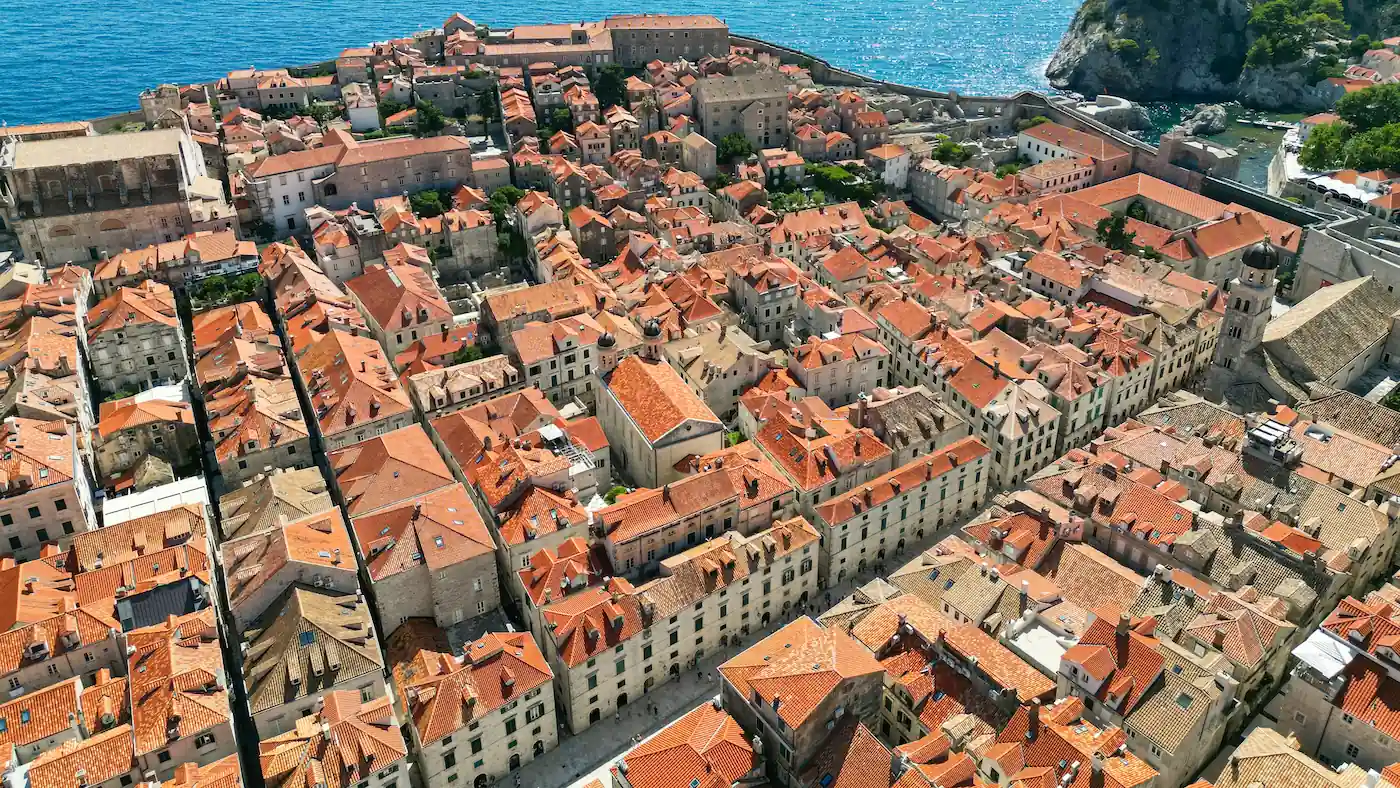
According to local stories, Dubrovnik did not begin as a single settlement, but as two separate communities.
Two settlements at the beginning
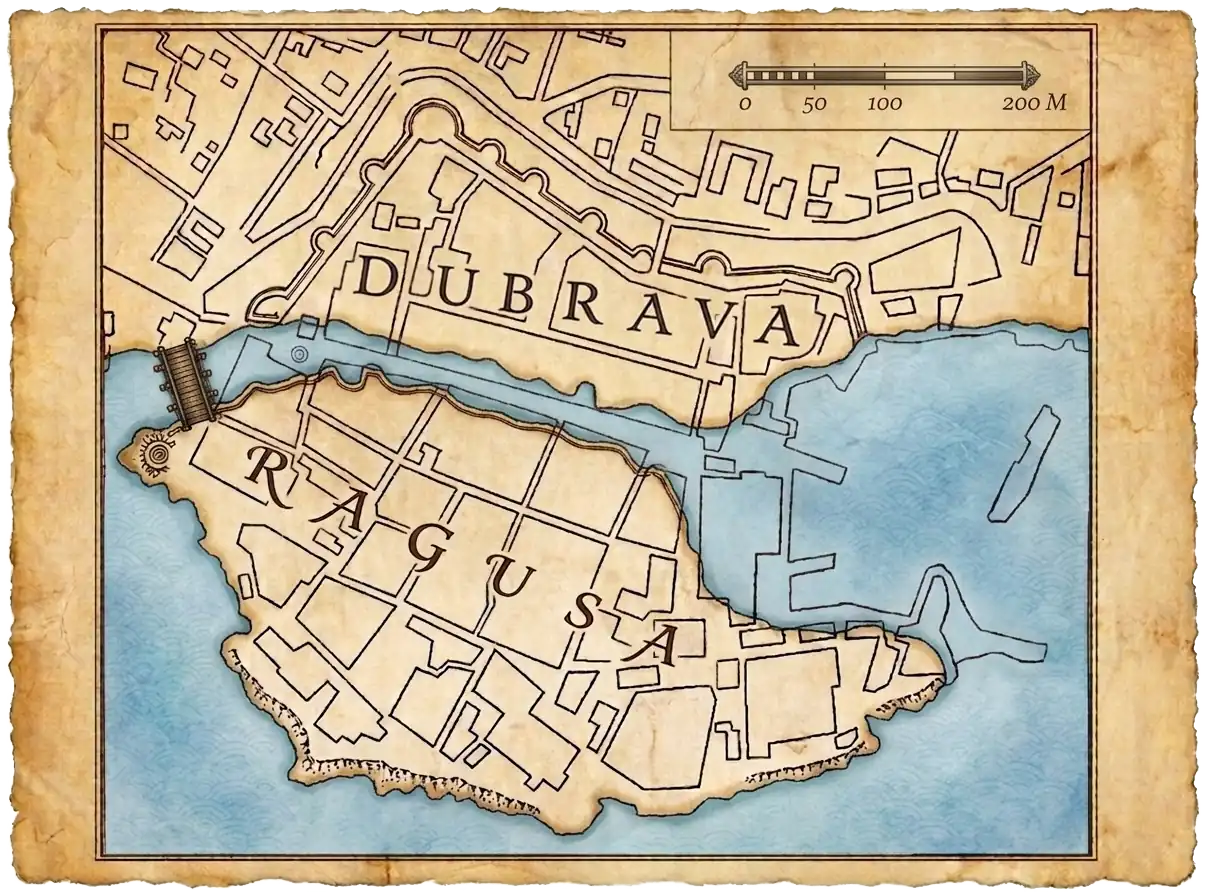
On the rocky coast stood Ragusa, a small settlement traditionally linked to refugees who fled the destruction of Epidaurum, located at the site of present-day Cavtat.
Across from it, on the mainland slope, Slavic settlers formed a separate community called Dubrava.
The space between them
Between these two settlements there was a narrow sea channel, small but enough to separate daily life and development.
The line of that channel is often associated with what is today the main street of the Old Town, Stradun.
How the separation disappeared
There is no single recorded moment when the two sides became one city. The change is understood as a gradual process.
Over time, the channel was filled in through construction and natural change, until land replaced the water and the separation between the two settlements faded.
From boundary to center
What once divided the two communities became the central street of the city.
Stradun gradually became the main street of Dubrovnik, replacing the space that once separated the early settlements.
Two names for one city
The city’s dual origin is reflected in its two names, which preserve the different linguistic roots of the early communities.
Ragusa, found in Latin and Italian sources, stems from the rocky coastal settlement. In contrast, Dubrovnik develops from the Slavic word Dubrava, meaning "oak forest".
Both names refer to the same place, reflecting the distinct linguistic and cultural origins that shaped the city’s identity.
How this story is understood today
This explanation is widely repeated and fits the layout of the Old Town.
However, recent archaeological research has raised questions about how Dubrovnik developed in its earliest phase. Some findings suggest the city may have had a more complex beginning than the traditional account describes.
What remains is a story that continues to be told alongside new interpretations of Dubrovnik’s early development.